
Introduction
Properties including density and heat resistance are compared between Silicon Carbide vs Graphite Crucible. The density of graphite is about 1.8–2.1 g/cm³ and won’t be destroyed at temperatures of up to 3000 °C. Therefore, SiC crucibles have a density close to 3.1 g/cm³, and stand well at around 1600°C. Both serve in hot furnaces. Find out what each of them serves in metal melting.
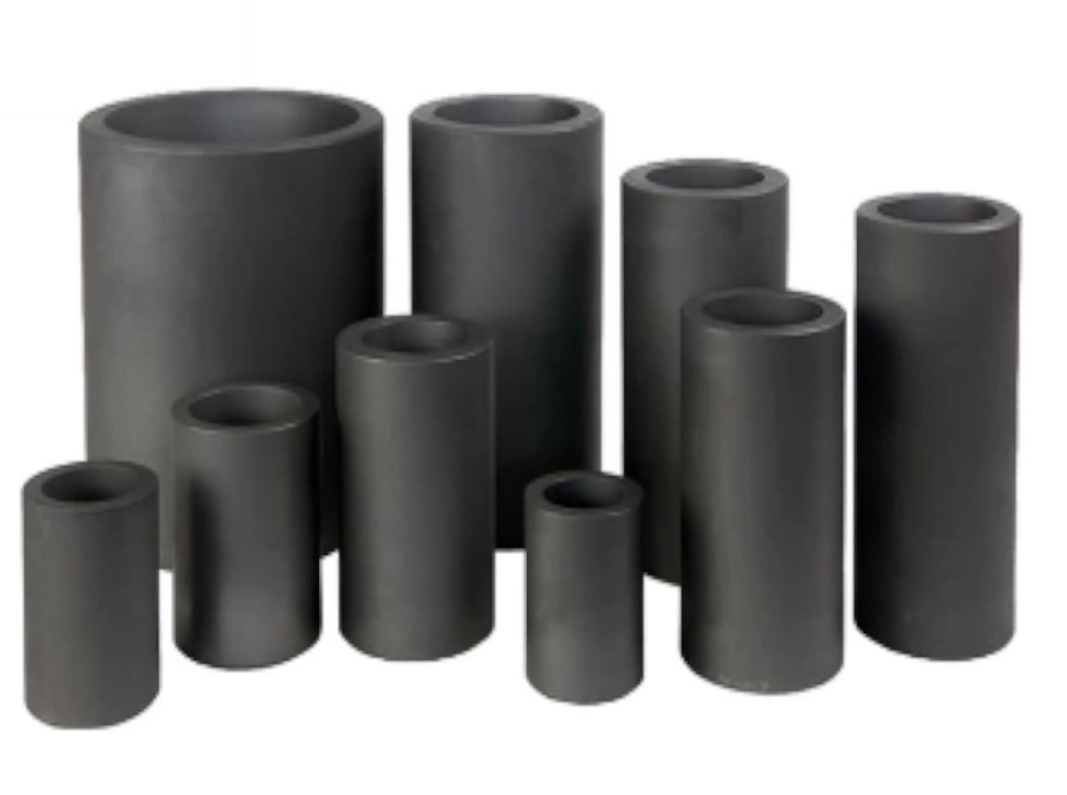
What Is Graphite Crucible?
Graphite crucibles reach 3000°C. That is hot! It melts Al and Cu. It is light, due to a density of 1.8 g/cm³. Its strong because it uses SiO₂ coating. This material has a heat flow of 200 W/m· K, excellent melting capability.
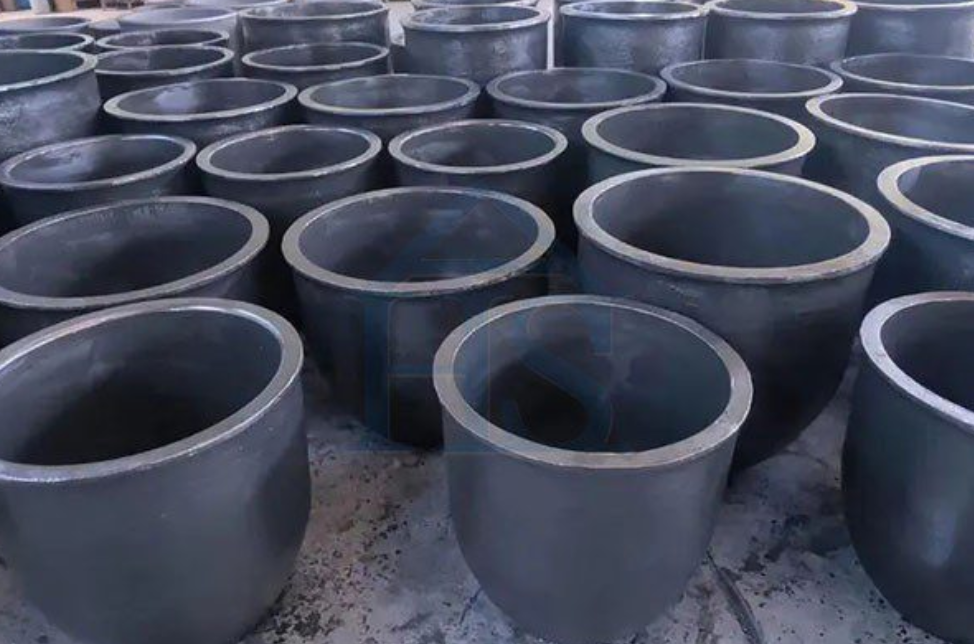
What Is Silicon Carbide Crucible?
Silicon carbide crucibles reach 1600°C. But they are harder, rated 9 on the Mohs scale. The middle comparison, “Graphite Crucible vs Silicon Carbide Crucible,” shows this crucible is heavy at 3.1 g/cm³. It works in Fe and Pb foundries. This has 300 MPa strength.
Graphite Crucible vs Silicon Carbide Crucible – Key Differences!
· Melting Point
Graphite crucibles melt at 3,650°C, but SiC stops at 2,700°C. This requires change in the furnace. Graphite Crucible vs Silicon Carbide Crucible shows SiC heats quicker. Both melt metals differently.
High heat tasks but at different temperatures, they can run appropriately for different furnaces and alloys.
· Chemical Resistance
Strong acids are easily handled by SiC. Fluorine doesn’t hurt it. Here, Graphite doesn’t work that well. The Graphite Crucible vs Silicon Carbide Crucible comparison shows SiC resists chemicals better.
When molten salt is involved, this is useful. They can all fitting different metals or chemicals, depending what they do in furnaces.
· Material Porosity
The gases pass more easily, as the graphite has 10 percent more porosity. Gases can’t get in with SiC when melting metal. This helps metals stay pure. The Graphite Crucible vs Silicon Carbide Crucible comparison shows SiC’s porosity makes it better for purity. If graphite is used in such settings, then gases can weaken the process.
· Electrical Conductivity
SiC is electrically resistant and graphite is electrically conductive. SiC has 1.0e+06 Ω·cm, graphite 10⁶ Ω·cm, and 105 S/m. In electric furnaces this is an issue. Electric arc melting depends on conductivity.
Electrical heating is better with graphite. It’s unsuitable as electric melting, but more than suitable for insulation. Jinsun Carbon graphite electrodes conduct electricity better for efficient arc furnace operation.
· Thermal Stability
Reaching fast heat changes up to 1,500°C, SiC is able to absorb and release extreme change in heat compared to conventional materials. When temperatures change it, graphite can crack more easily.
For this reason, SiC can operate stably under fast changes in heat. However, each material is suitable for other uses depending on temperatures in the furnace, with SiC providing best performance when there is quick change in furnace temperatures.
· Oxidation Resistance
Graphite oxidizes at 450°C, but SiC holds stronger, taking up to 1,000°C. SiC remains strong in oxygen. It has an advantage since it is in oxygen heavy environments. Graphite has to be protected from itself, otherwise it wears down faster. In oxidation resistance SiC wins again, remaining intact during hot, oxygen full processes.
· Heat Absorption
SiC absorbs less heat (at 1.23 J/g·K) than graphite (at 1.75 J/g·K), but it releases it faster. These changes melting rates. For example, furnace energy is affected by crucible heat absorption in the melting metals.
The way each material deals with heat is different. It is beneficial to know what crucible to use for a certain metal job. For high performance metal smelting, our graphite electrodes are exported to more than 30 countries.
| Parameter | Graphite Crucible | Silicon Carbide Crucible |
| Melting Point | 3,600°C | 2,800°C |
| Chemical Resistance | Moderate (Acids/Alkalis) | High (Acids/Alkalis) |
| Material Porosity | Low | Lower than graphite |
| Electrical Conductivity | High (Conductive) | Moderate (Semi-conductive) |
| Thermal Stability | Excellent (Up to 2,500°C) | Very high (Up to 2,200°C) |
| Oxidation Resistance | Low | Higher (Better against air) |
| Heat Absorption | High | Moderate |
Table on Graphite Crucible vs Silicon Carbide Crucible – Key Differences!
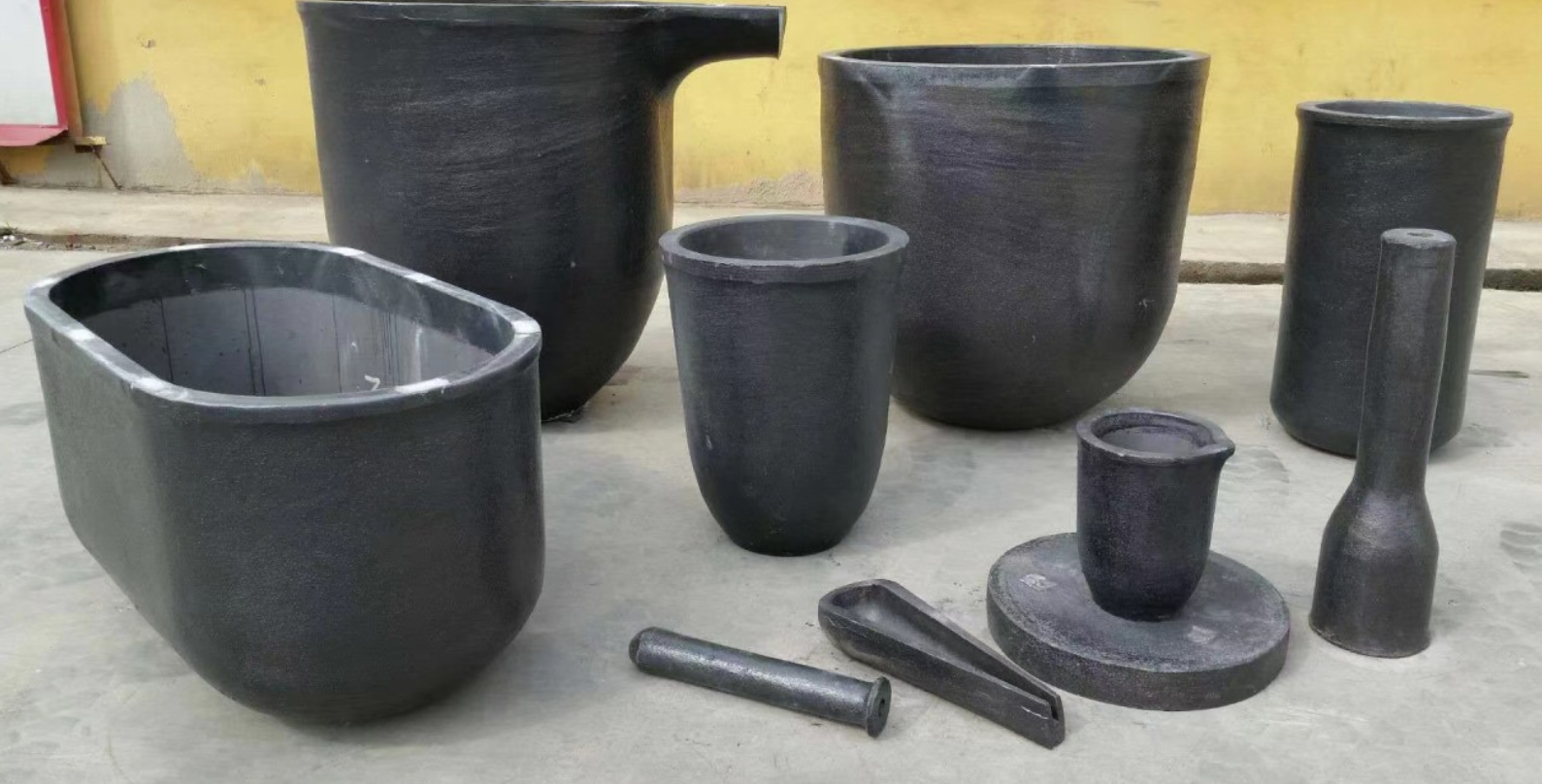
Thermal Conductivity and Heat Resistance of Graphite Crucible vs Silicon Carbide Crucible!
· Heat Transfer Efficiency
Graphite moves heat faster at 700 W/m·K. SiC transfers heat at 360 W/m·K Silicon Carbide vs Graphite Crucible shows that SiC melts iron (Fe) evenly. For faster heat changes, graphite is better. The different suits work on different kinds of metal like aluminum (Al).
· Maximum Operating Temperature
SiC can reach 1600°C where graphite hits 3000°C. As a result, Graphite is perfect for very hot tasks. Eventually they melt these things like steel. SiC handles common jobs. The difference in temperatures is key in the Graphite Crucible vs Silicon Carbide Crucible debate.
· Heat Retention
Graphite retains heat longer. SiC has 0.75 J/g·K while SiC has 0.7 J/g·K. That means SiC cools faster. How they behave towards metals like copper (Cu) is different. If heating takes longer, then graphite is an excellent help, so it is used in a large number of processes.
· Thermal Degradation
Graphite resists high heat. At 1600°C SiC begins to breakdown. It resists up to 2000°C. That difference makes Graphite last longer. SiC cracks in intense heat. And their lifespan depends on the heat.
· Temperature Range
Graphite is stable from room temperature to 3000°C and working temperatures from -50°C to 2500°C. The SiC temperature range is -20°C to 1600°C. They do different jobs.
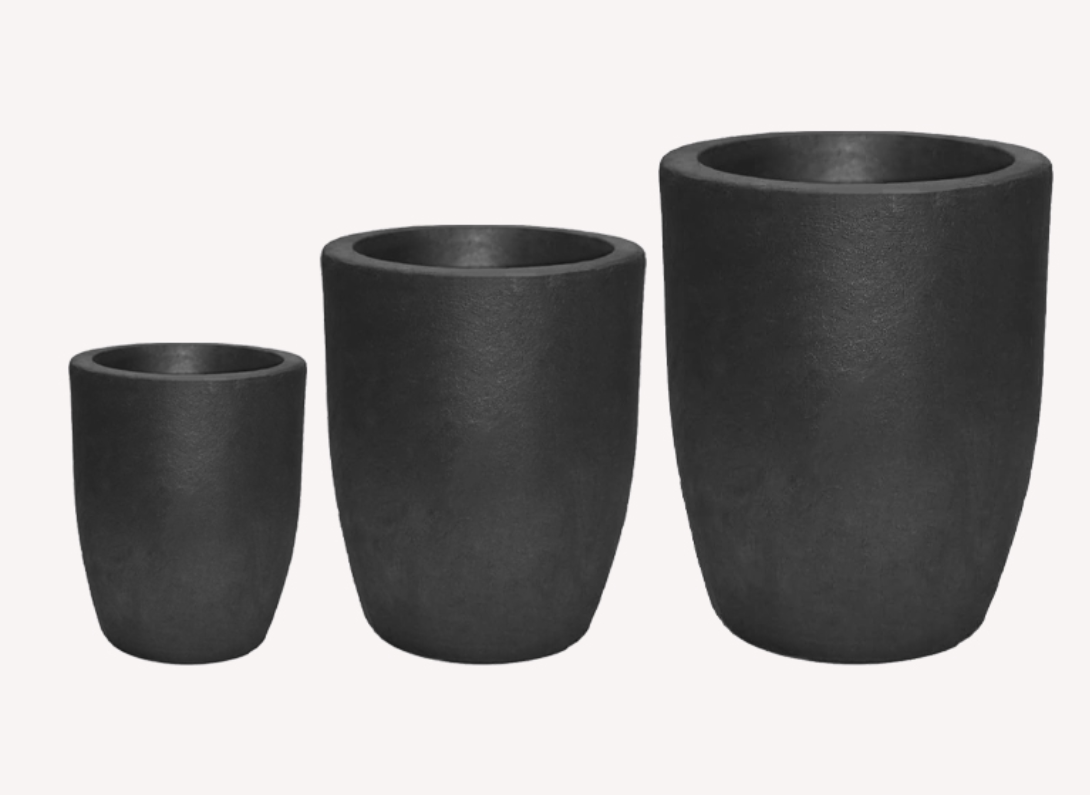
Durability and Mechanical Strength in Graphite and Silicon Carbide Crucibles!
· Fracture Toughness
Graphite crucible is strong at 4 MPa√m. It is tougher at 9 MPa√m with Silicon carbide (SiC) crucible. It can withstand hotter melts up to 1800°C. Thicker walls stop the cracks. Also, this is good if pressure is 3000 psi.
· Compressive Strength
Heavy loads can be carried. Graphite crushes at 40 MPa. SiC is 300 MPa. Molten metal at over 1600°C are protected by this. SiC crucibles are thicker. They last through melts. With 1000 kg/cm² pressure, it works.
· Wear Resistance
Wear resistance of crucibles is up to 1650°C. Silicon carbide lasts longer. This makes it stronger than graphite crucibles. In 200 melts, SiC resists friction. Graphite Crucible vs Silicon Carbide Crucible shows SiC wears less. It achieves surface hardness of 25 GPa, high compared to graphite at 15 GPa.
· Crack Propagation
SiC crucibles are also slower growing cracks. Its thermal expansion has a value of 4.6 μm/m°C. At 7.4 μm/m°C, graphite expands. Under heat, the crucible is strong. Graphite Crucible vs Silicon Carbide Crucible tests show fewer cracks. This is good for molten metal safety, especially at 1600°C.
· Impact Resistance
Crucibles resist impact well. Graphite absorbs 80 J energy. It absorbs 200 J. SiC crucibles are tougher due to that. When dropped, they won’t break easily. What’s more, they stay strong when temps change. At 2.1 g/cm³ weight, SiC is most effective.
Material Composition and Structure!
· Carbon Content
Graphite has 95% carbon. Its 70% is Silicon carbide (SiC). Their atoms stick tightly. Graphite has lighter C-C bonds. SiC adds silicon atoms. That makes it strong at 2500°C. At +3000°C, graphite melts better. Both works differently! Graphite Crucible vs Silicon Carbide Crucible shows how carbon levels change metal heating speed.
· Grain Alignment
The SiC grains measure 12 microns. The graphite grains are bigger at 16 microns. This makes surfaces smoother because smaller grains. This helps metal not stick! In strong terms, fracture toughness for SiC is 50 MPa in contrast to graphite’s 30 MPa. The cracks are controlled by grain direction. That helps keep the crucibles working hard!
· Crystal Lattice
Lattice spacing of 3.35 Å of graphite. Its 7.48 Å wide and thus tougher. At 2000°C SiC holds shape better. Silicon atoms in its bonds make it that way. Heat flows differently on a lattice structure. The design of Graphite Crucible vs Silicon Carbide Crucible shows this difference clearly.
· Molecular Bonds
This means SiC bonds have 452 kJ/mol energy. Graphite has 348 kJ/mol of carbon bond. However, the Si–C bonds are quite heat-crack resistant! According to delegates, graphite is good at bearing sudden heat changes. They are sturdy for the way that they react a but flexible. That’s both types are good for different heating jobs at high temperatures!
· Material Density
However, SiC is also denser (3.1 g/cm³). Graphite is only 1.9 g/cm³, so it’s obviously not very dense. That slow heat and handle more pressure. They are different than how they react to weight. Temperature at 2500°C can be handled by the dense SiC. Graphite is lighter so it heats faster. Both materials work very hard to melt metal!
Differences in Performance in Specific Industrial Applications!
· Steel Foundries
Hot steel melts at 1,500°C. The SiC crucibles provide resistance to shocks caused by heat change. But they hold heat fast, 130 W/m·K. Both handle 15 tons of steel each day. It can survive 3,000 heating cycles. 200 kW power furnaces work better because of the crucible.
· Jewelry Casting
Gold melts at 1,064°C. Casting in SiC crucibles lasts 200 cycles. Contamination on less than 0.01% is prevented by graphite, and gold mixing has not affected the absorption of gold. 2 kw machines heat fast.
Graphite Crucible vs Silicon Carbide Crucible shows better performance in vacuum casting at 2 bar pressure. They make nice shiny rings too both.
· Aluminum Smelting
Aluminum melts at 660°C. Silicon Carbide vs Graphite Crucible helps speed the heating, up to 2°C/min. 1,200 cycles show the SiC type is more resistant to cracks. It is used in furnaces of 5 kW. The 10% more production melts aluminum a bit faster too. Crucibles hold 50 kg.
· Ceramic Manufacturing
To make ceramics, they reach 1,400°C. Fast heating measured to 3°C/s is handled by SiC crucibles. It keeps it clean, there is no metal contamination because the graphite type. They each work in kilns up to 50 liters. It survives 800 cycles at 1,200°C. That aids in making smooth ceramic.
· Chemical Processing
Reactors go up to 1,200°C. Graphite crucibles resist acids, lasting longer. SiC can also withstand high pressure — up to 2,500 PSI. This makes reactions faster. In 100-liter reactors, it heats up 90 W/m·K thermal flow. In 100 kW reactors, they are pretty solid at handling heat, too.
Which Crucible is Right for Your Process?
· Operating Temperature
Up to 3,000°C it can get hot, graphite. SiC itself remains at a cool 1,600°C. This affects heat flow. By managing temperature differently. SiC has thermal conductivity of 120 W/m·K, which quick cooling or heating helps. Your process’s speed depends upon choosing right. That’s how “Graphite Crucible vs Silicon Carbide Crucible” performs under heat. Each suits different needs.
· Material Reactivity
Graphite reacts above 450°C. SiC stays safe till 1,600°C. Less reactions happen inside. The extraction rate of SiC is 0.1 µm/year. It keeps things clean. It prevents troubles of the furnace. Reactivity changes how “Graphite Crucible vs Silicon Carbide Crucible” behave with gases or chemicals. Keeping things pure means picking wisely.
· Process Duration
Graphite lasts 1,200 cycles. SiC can last 2,500 cycles. For SiC, it is a 0.5 mm/year wear rate. They stay strong for longer. Your process time is affected by each cycle. SiC is 9 on the Mohs scale for hardness. Better durability means longer process needs better durability. This makes your process smooth and economical.
· Metal Compatibility
Graphite melts steel. SiC melts copper, brass and aluminum. The porosity of SiC is 8%. Different metals work with them. Melting cleanly is about compatibility. It keeps metals pure. SiC’s thermal expansion is 4.3 µm/m°C. Do not contaminate with metal.
· Budget Constraints
SiC costs $100, although graphite is only $50. This impacts your money plan. They wear differently. The SiC lasts longer and in the end, it saves your money. The price of each crucible, however, dictates how it works. Save money paying for replacements. Pick wisely. The more you pay for something and the longer it takes to arrive, the more you will spend.
Conclusion
Graphite Crucible vs Silicon Carbide Crucible compares heat, strength, and more. 1,000°C oxidation resists the SiC, but the graphite can handle only 450°C. Graphite heats fast with 700 W/m·K thermal flow. Check them out at JINSUNCARBON.
 EN
EN  RU
RU  TR
TR  FR
FR  DE
DE  KO
KO  UK
UK  JA
JA  PT
PT  CEB
CEB  AZ
AZ  BN
BN  VI
VI  ES
ES  ES_ES
ES_ES  ID
ID  IT
IT  ES_AR
ES_AR  HI
HI  AR
AR  KK
KK  EL
EL  ZH
ZH  FA
FA  NL
NL