
Petroleum coke is a by-product of petroleum refining, which is black and porous. Because of the high carbon content, excellent heat resistance, and good electrical conductivity, it is widely used. Such as industrial heating and cement production, electrolytic aluminum and steelmaking, lithium batteries and special graphite. And it is an important raw material that supports the development of many industries.
Basic Overview of Petroleum Coke
Petroleum coke is a by-product of petroleum refining, which is produced by cracking and coking of reduced-pressure residual oil at a temperature range of 500-550℃. Its appearance is in the form of black or dark gray honeycomb structures, with a carbon content of 90% – 97%, hydrogen of 1.5% – 8%. And it contains a small amount of impurities such as iron and silicon. The classification methods are diverse, and different types have significant differences in properties and applications. According to the coking method, it can be classified into delayed coking, batch coking, etc.; according to the heat treatment method, it can be divided into raw coke and calcined coke; according to the different sulfur content, it can be classified as high-sulfur, medium-sulfur and low-sulfur coke; according to the structure, it can be divided into spongy, honeycomb-shaped and needle-shaped coke.
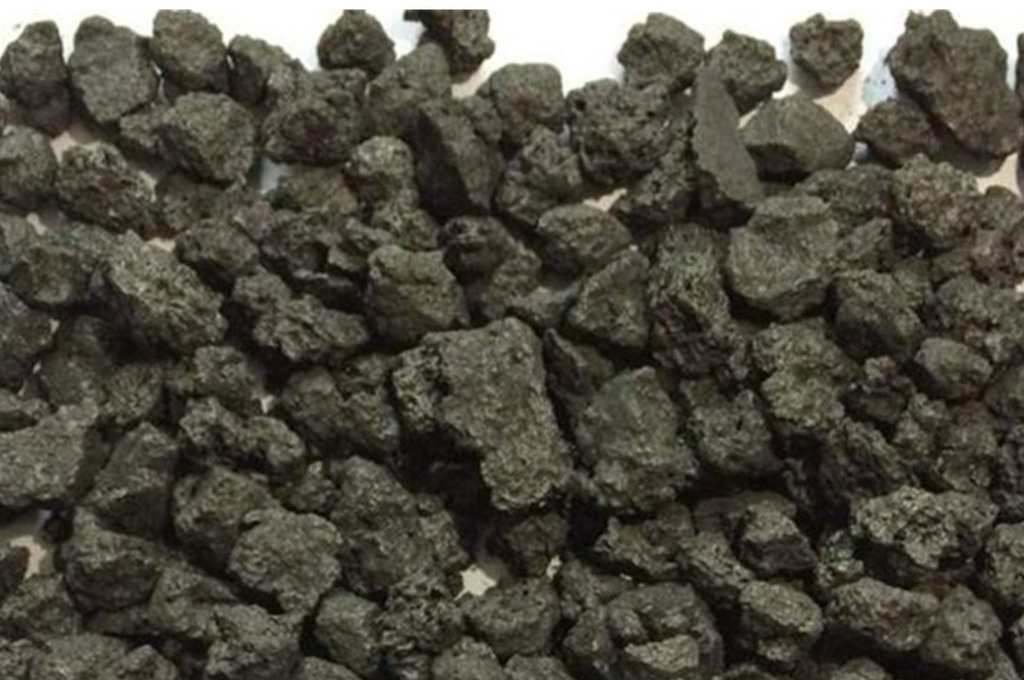
Applications of Petroleum Coke
Fuel Sector
Industrial Heating
Petroleum coke has the high calorific value and its lower calorific value is 1.5 to 2 times that of coal. So it has become an important fuel for industrial heating, and it can meet the production requirements of industries that require high-temperature environments. In ceramic production, the high-temperature combustion can quickly bring the clay body to the firing temperature. Moreover, it has low ash content and generates less combustion waste. This is beneficial for reducing pollution and equipment maintenance costs.
Cement Production
Petroleum coke plays a crucial role in cement production, which can meet the high-temperature calcination requirements of raw materials. And then it ensures the generation of high-quality clinker. Its combustion characteristics enable the cement kiln to burn stably and provide a continuous heat source. Reasonable use not only reduces production costs but also improves the performance of cement and enhances its strength and durability.
Power Generation
In power generation, some power plants mix it with coal for combustion, because it can enhance efficiency by utilizing its high calorific value. Different from coal-fired power generation, it sometimes can reduce sulfur dioxide emissions, and is convenient for storage and transportation. For regions lacking coal but having the capacity for petroleum processing, it is a feasible energy supply method.
Metallurgical Industry
Aluminum Electrolysis
In electrolytic aluminum production, petroleum coke is the main raw material for the pre-baked anode. Through processes such as calcination and molding, pre-baked anode has excellent electrical conductivity, high-temperature resistance, and chemical stability. It not only meets the requirements of electrochemical reactions within the electrolytic cell but supplies electrons for aluminum reduction. The anodes made from high-quality low-sulfur petroleum coke have a low consumption rate. And it can enhance the production efficiency, quality and reduce the cost of aluminum.
Carbon Addition in Steelmaking
With the high carbon content and low impurity characteristics, you can commonly use it in steelmaking as a carbon booster. It can effectively replenish the carbon element in the molten steel and precisely control the composition to improve the performance of the steel. Low-sulfur and low-ash petroleum coke has become the preferred choice in the production of special steels and alloy steels. It ensures the purity and mechanical properties of the steel, meeting the high requirements of the industry for steel quality.
Chemical and New Materials Sector
Anode Materials for Lithium Batteries
Petroleum coke is a precursor material for lithium battery anode, which has low cost and abundant resources. After special heat treatment and surface modification, you can transform it into an anode material with high specific capacity and good cycling performance. It has advantages in the first charge-discharge efficiency and low-temperature performance. This provides supports for the development of lithium battery technology in the fields of new energy vehicles and energy storage.
Preparation of Activated Carbon
Petroleum coke has a rich pore structure and high carbon content and it can be transformed into high-performance activated carbon. This type of activated carbon has a large specific surface area, well-developed micropores, and strong adsorption capacity. You can widely use it in water purification, air purification, food decolorization, etc. to improve the water quality.
Special Graphite Products
Electric Arc Furnace Steelmaking Electrodes
Through processes such as calcination and graphitization, graphite electrodes made from petroleum coke has high conductivity, strong mechanical strength, and high temperature resistance. And it can withstand the high temperatures and strong currents of the electric arc furnace. Needle coke-made ultra-high power electrodes are essential materials for large electric arc furnaces, enhancing steelmaking efficiency and reduce energy consumption.
Graphite for Nuclear Reactors
It is made from petroleum coke as the raw material and is processed through special purification procedures. It has extremely high purity, good thermal stability, and radiation resistance, which ensures the safe and stable operation of the reactors. So as a key material for nuclear reactions, you can use it in the reactor core structure and moderator of nuclear reactors.
High-End Sealing Materials
With the self-lubricating property, high temperature resistance, and chemical stability, it has become ideal sealing materials for aerospace, petrochemicals, etc. It can maintain sealing in extreme conditions, prevent medium leakage, and ensure equipment operation.
Other Emerging Applications
Hydrogen Production Feedstock
Because it is rich in carbon elements, petroleum coke can be hydrogenated through processes such as gasification. Controlling reaction conditions can increase hydrogen yield and purity, reduce costs and improve resource utilization.
Environmental Protection Sector
With the porous structure and high specific surface area, you can use it as an adsorbent for industrial waste gas treatment. Petroleum coke can remove pollutants such as sulfur dioxide and be transformed into harmless substances after treatment. And you can also use it for soil remediation, adsorbing and fixing heavy metals to reduce pollution.
Deep Processing of Carbon Materials
As an important precursor for carbon materials, you can transform it into high-performance materials such as carbon nanotubes. Through techniques such as chemical or physical vapor deposition, etc., these materials have excellent mechanical and electrical properties. So you can widely use them in high-end fields such as aerospace and information electronics.
Conclusion
Because of its unique properties, petroleum coke plays a crucial role in numerous fields such as fuel, metallurgy, and new energy. With the advancement of technology, its applications have been continuously expanded and its significance has become increasingly important. In order to support the sustainable development of various industries, it should enhance utilization efficiency and protect environmental through innovation.
 EN
EN  RU
RU  TR
TR  FR
FR  DE
DE  KO
KO  UK
UK  JA
JA  PT
PT  CEB
CEB  AZ
AZ  BN
BN  VI
VI  ES
ES  ES_ES
ES_ES  ID
ID  IT
IT  ES_AR
ES_AR  HI
HI  AR
AR  KK
KK  EL
EL  ZH
ZH  FA
FA  NL
NL