Advantages of graphite hot zone
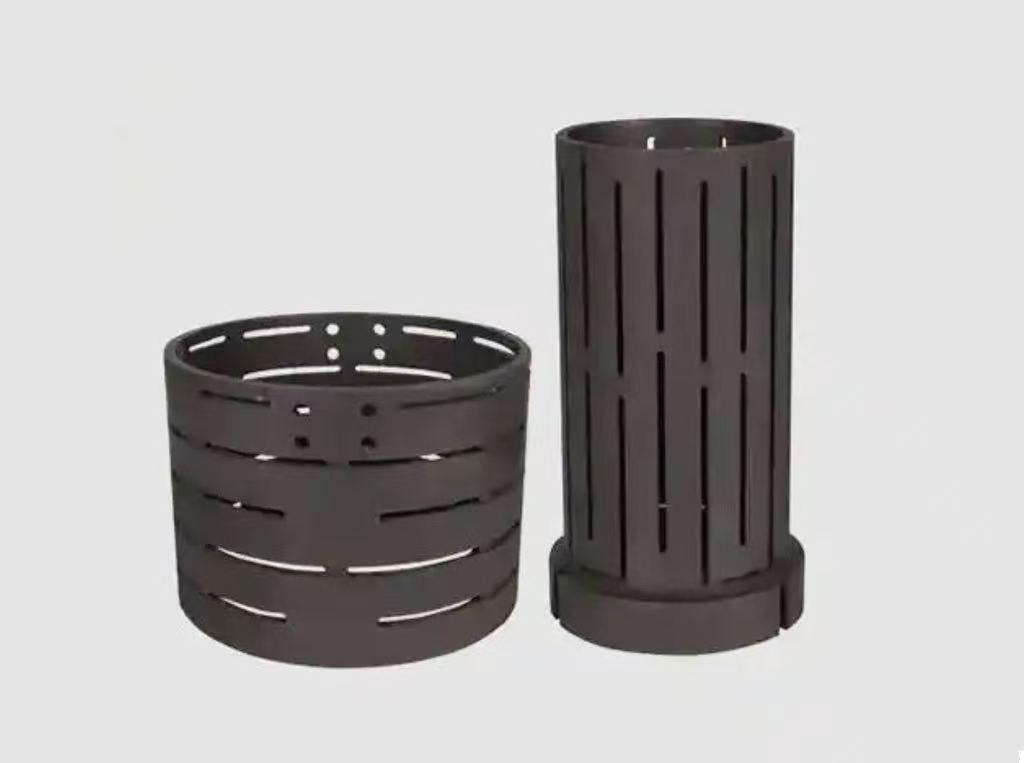
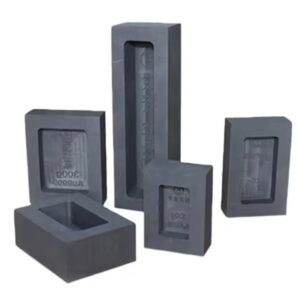
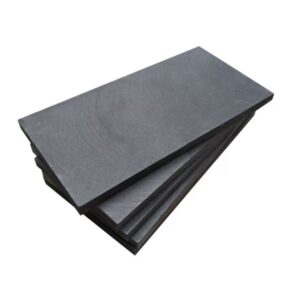
It is assembled from various graphite components such as cylindrical, disc-shaped, and block-shaped ones, exhibiting outstanding overall performance advantages.
Excellent high-temperature thermal stability
It can operate stably in the ultra-high temperature range of 2200℃ – 2800℃ for a long time in vacuum or protected atmosphere conditions.
Good thermal radiation reflection effect
It results in good temperature uniformity inside the furnace.
Stabil chemische Eigenschaften
It is unlikely to react with molten materials such as silicon and silicon carbide.
Excellent processing performance
You can precisely customize various components according to the furnace structure.
Overall high-temperature strength is high
With the small high-temperature creep, it has a long service life.
Good thermal conductivity
Because of the balanced heat transfer, it ensures a stable temperature field inside the furnace cavity.
EHervorragende elektrische Leitfähigkeit
This enables it to be directly used as a resistance Heizelement, which is suitable for the power heating system of high-temperature furnaces.
Uses of graphite hot zone
Semiconductor field
Single crystal crystal growth
Because of the low impurity content and controllable temperature gradient, it can construct a high-temperature chamber. So it provides ideal conditions for crystal nucleation and slow growth, which reduces defect generation and ensuring the quality of semiconductor wafers.
New material field
Powder and ceramic sintering
You can use it for sintering nitride aluminum, silicon carbide ceramics, and hard alloy in a high-temperature environment. With the uniform internal temperature field, and clean atmosphere environment, it makes the sintered ceramic workpieces have better consistency in density. And then significantly improving the mechanical properties of new material components.
Metallurgical processing field
Vacuum heat treatment and brazing
It can prevent the surface of the workpiece from oxidizing and decarburizing, which eliminates the need for subsequent extensive grinding treatment. You can use it to complete vacuum quenching, annealing, and vacuum brazing treatments within the graphite heat field. It can simplify the processing procedures, and improve the metal material’s microstructure.
Photovoltaic energy field
Gießen von polykristallinen Siliziumblöcken
You can use it to control the temperature changes throughout the process of silicon material melting and directional solidification. With the stable thermal field conditions, it can optimize the crystal grain structure of the silicon ingot.
Powder metallurgy industry
High-temperature sintering of alloys
Because of a stable temperature rise and small temperature fluctuations, it ensures the dimensional stability of large-scale components after sintering. And it makes the small batch-to-batch variations, which is suitable for large-scale mass production.
Special material preparation
Graphitization processing
It can achieve ultra-high-temperature treatment above 2500°C, which completes the crystal lattice reconstruction of the material. So it improves the conductivity of lithium battery negative electrode materials, meeting the performance requirements of battery materials.



 DE
DE  EN
EN  RU
RU  TR
TR  FR
FR  KO
KO  UK
UK  JA
JA  PT
PT  CEB
CEB  AZ
AZ  BN
BN  VI
VI  ES
ES  ES_ES
ES_ES  ID
ID  IT
IT  ES_AR
ES_AR  HI
HI  AR
AR  KK
KK  EL
EL  ZH
ZH  FA
FA  NL
NL