Advantages of Extruded Graphite Block
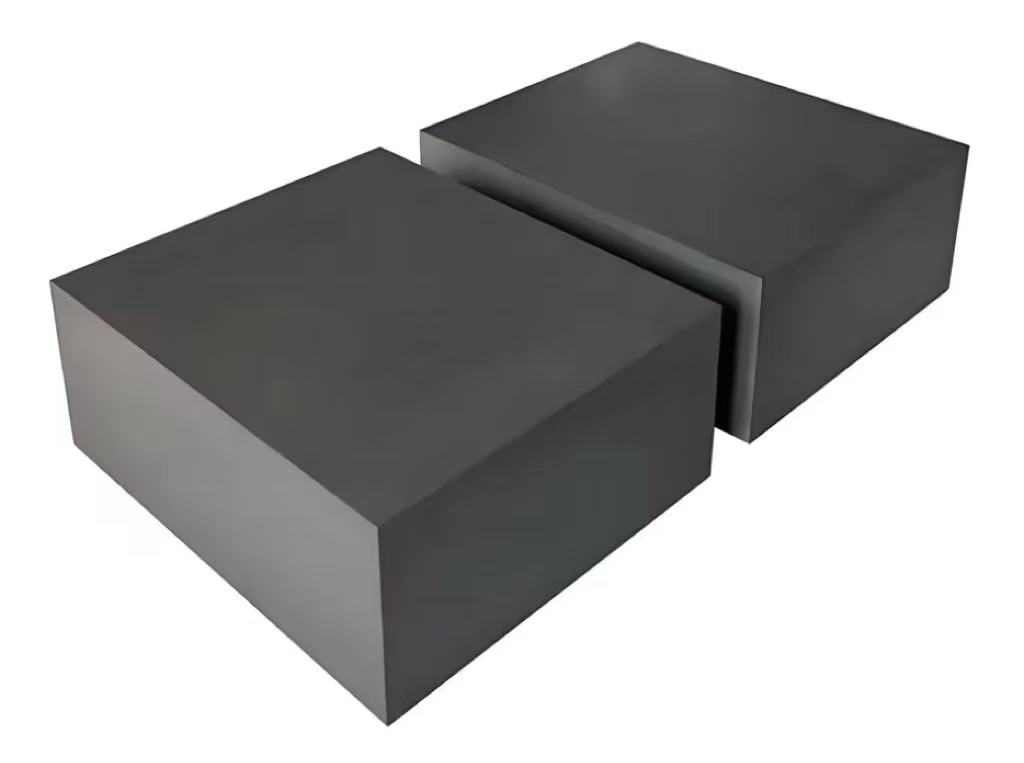
Its common shapes are square, circular, or other regular sheet-like forms, and its advantages are extremely prominent.
Excellent conductivity
With low resistance in electron transmission, it can efficiently conduct current, which ensures the stable progress of electrochemical reactions.
Sforte inerzia chimica
It is unlikely to corrode or deteriorate under harsh conditions and high temperatures, able to withstand -50°C to 800°C.
Moderate mechanical strength
This makes it easy to cut and drill according to requirements, processing into electrode structures of specific dimensions and shapes.
EEccellente resistenza alle alte temperature
It can maintain stable physical form and electrochemical properties in reactions accompanied by high temperatures such as electrolysis.
Low polarization degree
It can effectively reduce energy loss during the reaction process and improve the overall operation efficiency of the device.
Types of Extruded Graphite Block
Fine-grained graphite block
It has a dense structure, you can mainly use it for conducting current and participating in basic electrochemical reactions. Suitable for precision casting molds or electrical discharge machining (EDM).
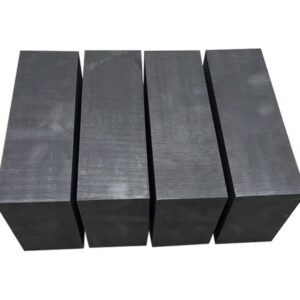
Medium-coarse grained graphite block
This blocco di grafite has good toughness and wear resistance, and you can use it to manufacture sealing materials, heat exchangers, and some corrosion-resistant chemical equipment parts.
Uses of Extruded Graphite Block
Campo dell'accumulo di energia
Lithium-ion battery
Because of the layered structure of graphite, you can use it as the core component of the battery negative electrode. It enables the insertion and extraction of lithium ions, ensuring the stability and efficiency of the battery’s charging and discharging process.
Supercapacitore
It has the large specific surface area, which can quickly adsorb and desorb electrolyte ions. So it achieves efficient storage and release of electrical energy, which is suitable for short-term high-power discharge scenarios.
Electrochemical industry field
Electrolytic Preparation
You can use it as the anode or cathode in processes such as electrolytic production of caustic soda from sodium chloride. It can conduct electricity and providing a reaction site, which ensures the continuous and stable operation of the electrolysis process.
Electroplating Process
It can release a stable current, causing uniform deposition of metal ions on the surface of the workpiece. So you can use it as an electrode in an electroplating tank to improve the quality of the coating. And it is suitable for surface treatment of hardware and electronic components.
Environmental protection and sensing field
Trattamento dell'acqua
In electrochemical wastewater treatment equipment, you can use it as an elettrodo for catalytic degradation of organic pollutants in the wastewater. Because of its stable electrochemical properties, it can enhance the degradation efficiency.
Electrochemical sensor
As the working electrode of the sensor, it generates an electrical signal through an electrochemical reaction with the analyte. It can enable precise detection of specific components such as heavy metal ions, harmful gases in gases and liquids.



 IT
IT  EN
EN  RU
RU  TR
TR  FR
FR  DE
DE  KO
KO  UK
UK  JA
JA  PT
PT  CEB
CEB  AZ
AZ  BN
BN  VI
VI  ES
ES  ES_ES
ES_ES  ID
ID  ES_AR
ES_AR  HI
HI  AR
AR  KK
KK  EL
EL  ZH
ZH  FA
FA  NL
NL