
Graphite tubes can also be exactly what you need if you are in a high-heat (or chemically aggressive) employment. These tube-shaped carbon materials are durable, thermally stable, and extremely resistant to corrosion. And their lightweight nature and excellent conductivity make them well-suited for dozens of demanding applications. They are used to protect and contain materials in laboratories, aerospace systems and anywhere else where other materials fail. Here’s how and why you might use them.
What Are Graphite Tubes?
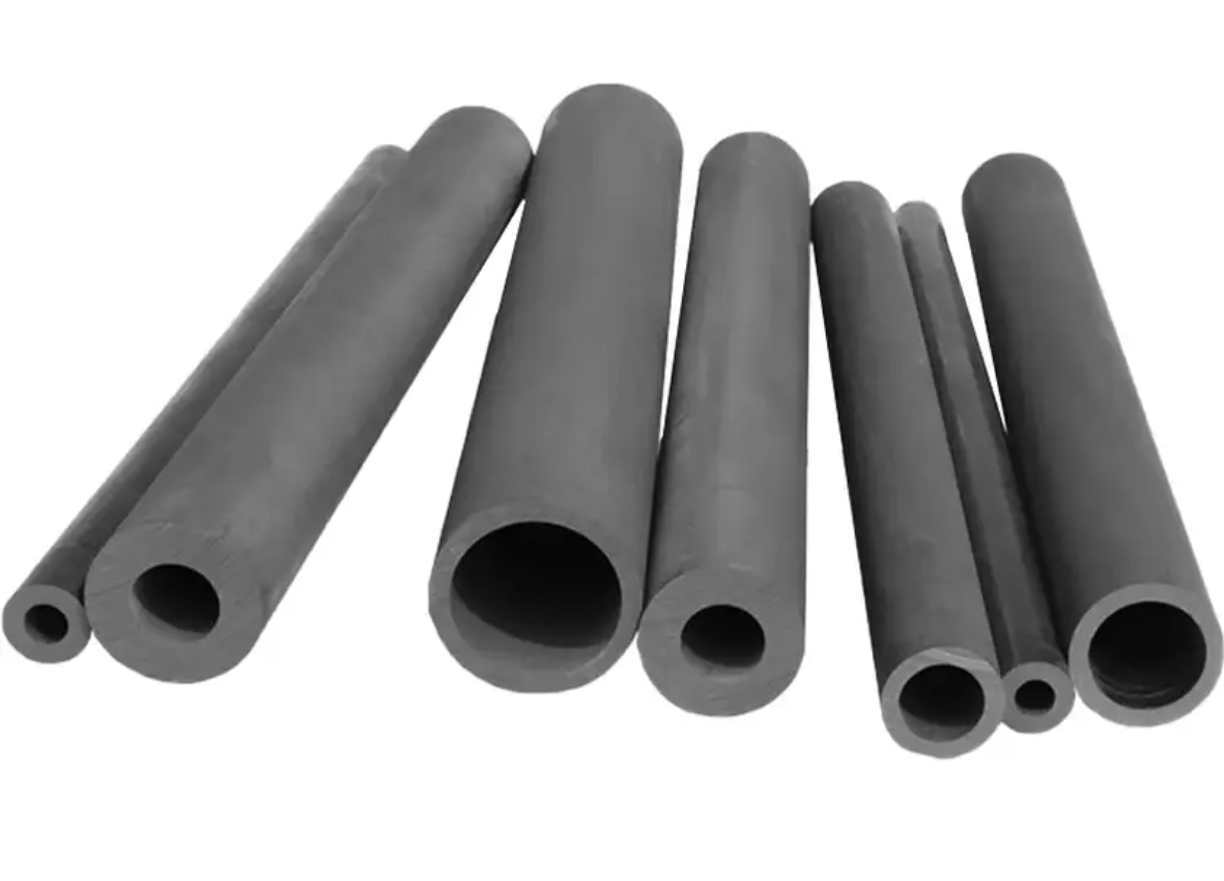
Hollow cylindrical structures built from high-purity graphite are termed graphite tubes. These tubes must withstand extreme heat, aggressive chemicals and intense mechanical stress. You’ll encounter them in applications spurring thermal conductivity, electrical insulation, or chemical resistance.
They come in various sizes, wall thicknesses, with various purity levels. Some are isostatically pressed to achieve uniform density, while others are extruded for long, continuous lengths. You select the type according to what you’ll use them for—lab analysis, smelting, heat exchange, even rocket engines.

Applications of Graphite Tubes
Laboratory Use
For analysis of trace elements in analytical laboratories (especially atomic absorption spectroscopy (AAS), graphite furnace tubes are the means by which you perform your experiments. The tubes are used as sample holders in graphite furnaces—where materials are vaporized at extremely high temperatures (usually greater than 2500°C).
All readings remain accurate and free from contamination due to graphite tubes. They have low reactivity, allowing your sample to remain pure during heating. And they react quickly to heat, making analysis more effective. You’ll also find them in thermal analyzers, including TG-DTA and TG-DSC machines.
Industrial Furnaces
Standard metals begin to deform or react when you are operating vacuum or inert gas furnaces. In such environments, graphite tubes serve as heating elements, thermal insulation components, or protective sheaths. An inherent thermal stability means they stay intact even under fast temperature fluctuations and long-term thermal cycling.
They are also useful in induction heating systems, where their conductivity and thermal endurance make them perfect.
Heat Exchangers
This is especially true in chemical plants and refineries, where aggressive chemicals must be treated at high temperatures. In shell-and-tube heat exchangers in which corrosive liquids and gases must be cooled or heated without contamination, graphite tubes are the ideal choice.
Graphite tubes won’t corrode in hydrochloric acid, sulfuric acid, or organic solvents like metal tubeS. The low thermal expansion of tungsten also minimizes the risk of stress-related failures.
Metal Casting and Foundry
Graphite tubes serve as continuous casting molds, especially for non-ferrous metals like copper or aluminum. They provide consistent cooling, and their surface allows for metal to slide. It enhances the surface quality of your finished product.
Chemical Processing
In reactors, storage tanks, or pipelines, internal machinery is protected by graphite tubes. They are helpful in working with strong acids, alkalis, or solvents. Their resistance to corroding helps minimize maintenance and downtime.
Aerospace Industry
You need materials that can take in aerospace that high, extreme temperature, extreme mechanical stress. These are used for nozzles, heat shields, and thruster linings. The lightweight means less overall mass to deal with, which is critical in spacecraft design.
Electrochemical Applications
Graphite tubes can be used as electrodes when building electrolytic or fuel cells. They have high electrical conductivity and long operational life. You’ll find them in metal plating, chlorine production and battery systems.
Nuclear Applications
Graphite tubes are a common neutron moderator and reflector used in nuclear facilities. They retain structural integrity at elevated levels of heat and radiation. They are great assets for advanced reactors and experimental set-up.
High-Temperature Applications
Graphite tubes are the superior choice over nearly all other materials for thermal processing. For vacuum furnaces, crystal growth chambers, and semiconductor diffusion ovens, graphite components won’t melt, shrink, or crack—even after multiple cycles.
These tubes also withstand thermal shock, allowing them to move from hot to cold without fracturing. And that’s a major victory for reliability and safety.
Automotive Industry
Note that graphite tubes might be employed in gaskets, brake linings, and heat exchangers. Their Thermal characteristics assist to control warmth produced in engine compartments or braking structures. They’re also durable and sound-absorbing.
Instruments
Medical devices and scientific tools are precisely what they are — precise. You’ll work with graphite tube in mass spectrometry, X-ray analysis, and thermal testing instruments. They are pure, stable, and have low reactivity, ideal for sensitive environments.
They’re also present in devices used in pharmaceutical R&D, bioanalysis and chemical diagnostics.
Advantages of Graphite Tube
High thermal stability.
Graphite tubes retain their shape and strength even up to 3000°C so you can stop worrying about deformation, melting, or any expansion under intense heat.
Very good electric conductivity.
They are good conductors of electricity. Or employ them for use as electrodes, sensors, or conductive paths in electrical systems and testing setups.
Corrosion resistance.
They provide resistance to acids, alkalis, and most industrial solvents. Graphite does better than most metals if you are working with corrosive chemicals.
Lightweight and durable.
Graphite tubes are lighter than their metallic counterparts. Helps maintain strength while reducing structural load; useful in aerospace and automotive systems.
Conclusion
In reality, graphite tubes are cylinders made of carbon. They are also powerful tools for scientists, engineers, and manufacturers.” You deploy them when the conditions are too extreme for metals or plastics. Graphite tubes excel where other materials fail, providing heat resistance, corrosion protection, or excellent conductivity. If you haven’t used them in the past, now is the time to think about them in your next high-performance application.
 VI
VI  EN
EN  RU
RU  TR
TR  FR
FR  DE
DE  KO
KO  UK
UK  JA
JA  PT
PT  CEB
CEB  AZ
AZ  BN
BN  ES
ES  ES_ES
ES_ES  ID
ID  IT
IT  ES_AR
ES_AR  HI
HI  AR
AR  KK
KK  EL
EL  ZH
ZH  FA
FA  NL
NL