
Introduction
Why graphite is special is it special? It is strong and slippery. It moves electricity easily. And resistant to high temperature corrosion. You will learn more about the properties of graphite here. We will take a closer look from the standpoint of what makes graphite such a perfect material for machine use. If you want to see how graphite helps engineers, keep reading.
Understanding the Physical Properties of Graphite!
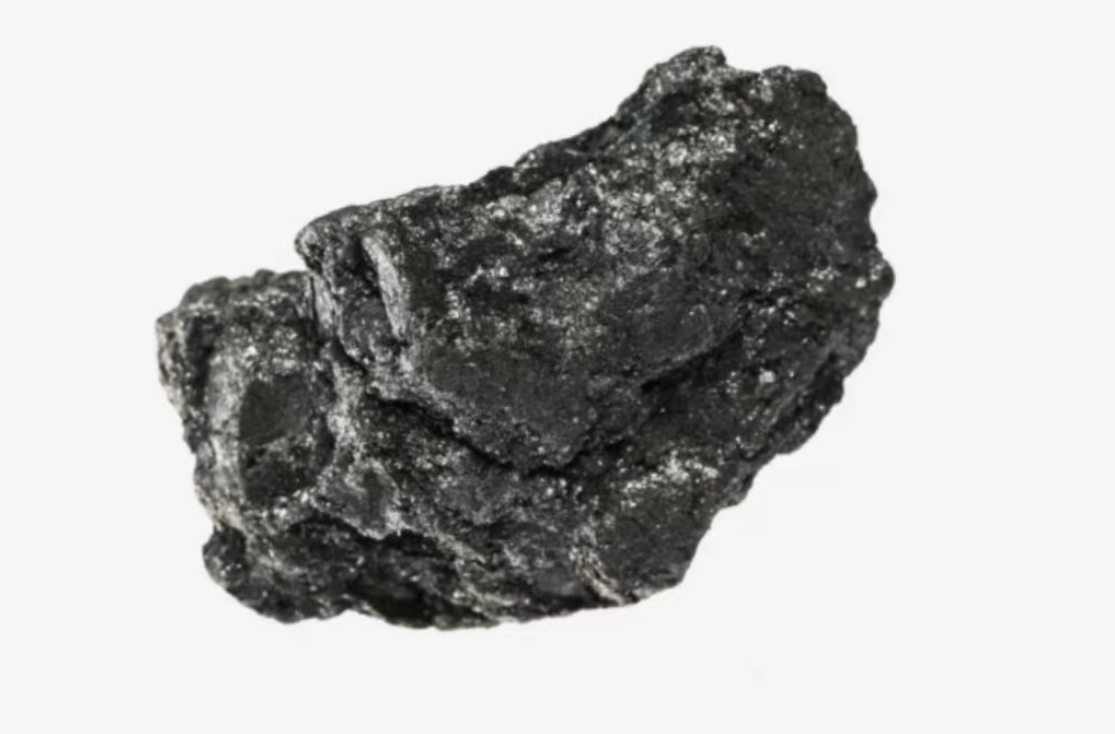
Graphite is made of carbon. The layers are soft, and move easily. Each layer is flat. The properties of graphite include its light weight, about 2.26 g/cm³. You can reach out and touch it and it’s slippery. That’s how it’s used to move electricity through it. Graphite is used in batteries and pencils as well.
Not only does it also melt only at super-hot 3550°C but it is also very strong. It is this special thing that makes it good inside machines. Graphite is different to diamond but quite useful. Carbon can also be in a difference shades of carbon; they both are but it works differently.
Chemical Properties of Graphite!
· High Inertness
Graphite is not easy changing. Most chemicals don’t change. The electrons sitting in the carbon atoms in graphite are very strong. Graphite is safe because they are arranged in layers. it does not corrode in acid or base. On the other hand, you can use graphite in factories and it works at 3600°C!
This is why it’s good in big machines. It works for very high temperatures you can trust it. In nuclear reactors, too, graphite is strong. You will find that it lasts longer than just about any other material. This is how Jinsun Carbon makes graphite electrodes that can still work in factories under high heat, for a long time.
· Oxidation Resistance
Graphite is tough. It will not break when hot. Below 600°C it does not react with oxygen. Meaning that it’s safe for factories. It is used in kilns (if you were using it creating electrodes).
Properties of graphite include its strength when things get hot. That’s because graphite protects itself from breaking down and lasting longer. In metal factories where heat is very high, you want to use it. Everything stays safe and strong. Jinsun Carbon provides graphite electrodes for metal factories that endure extreme heat, safely.
· Acid Resistance
Graphite is safe in acid. It doesn’t react when you put in a strong acid, like sulfuric acid. It is found in batteries or at chemical factories. This material is good works in hard places.
Graphite lasts because the atoms are so strongly bonded. Properties of graphite mean it does not change, even in acid. It maintains the machines in running condition. In many of the industries where you can break other materials except to a strong acid, you use it.
· Alkali Resistance
In alkali, graphite remains strong. It does not react to strong chemicals, like sodium hydroxide. It is hard to break down. You need things to last in your factory.
Graphite resists the chemicals that could damage other things. Graphite is safe because the carbon atoms keep it so. It has high resistance to alkali; it can be used where other materials won’t last long. It works when things go wrong, yet it still works when they go right.
· Thermal Stability
Graphite is stable in heat. It can take temperatures as high as 3600°C. It will not melt. But the carbon layers remain strong and safe. It can be used in very hot machines like heat shields and rocket parts.
Heat also in graphite goes well. That’s why it’s in electronics. It keeps machines cool. Its thermal stability is one of the best properties of graphite. It’s in many high-heat places so things work better. These extreme conditions? No problem, Jinsun Carbon’s graphite products excel.
| Property | Graphite | Inertness | Oxidation Resistance | Acid Resistance | Alkali Resistance | Thermal Stability |
| Inertness Level | High | 9/10 | Medium | High | High | Excellent |
| Oxidation Temp. | > 600°C | N/A | Yes | Limited | Yes | Up to 3000°C |
| Acid Reaction | Resistant | No Reaction | Minor | Stable | No Reaction | Stable |
| Alkali Reaction | Resistant | No Reaction | Yes | Yes | Stable | Stable |
| Thermal Conductivity | 100-400 W/mK | No Effect | Some Degradation | No Effect | Minimal Impact | Remains High |
| Structural Integrity | Strong Bonds | Maintained | No Significant Change | No Damage | Maintained | Remains Intact |
Table on Chemical Properties of Graphite!
Mechanical Properties and Strength of Graphite!
· Low Tensile Strength
Pulling apart graphite is not strong. It is that which can break with a force of 20–25 MPa. When you pull on graphite, its snaps because it can’t stand that much force. When stretched, its carbon layers slip. Over 500 MPa tensile strength, things are stronger: steel, for example.
When you think about the properties of graphite, remember it cannot handle stretching well. It breaks easily if pulled too hard. Tensile strength means how much strain can be put on something before it breaks.
· High Compressive Strength
If you push on graphite, it gets very strong. This thing can put up to 150 MPa of pressure over you. It stays strong if you press it down. Even under lots of force, Graphite’s layers are tough to squash. It’s strong because the hexagonal atoms help keep it strong when it’s squeezed.
When you think about the properties of graphite, you see that it’s good at handling pressure. Both its strength and its compressive strength make it a good candidate for use in seals that must stay tight.
· Anisotropic Behavior
The way you push it makes a difference for graphite. It tears apart easily in one direction. It’s strong against squeezing in another. This is anisotropic according to engineers.
Pulling them apart makes the carbon layers slide apart, but resist pressure. These properties of graphite make it special for things like electrodes. It even conducts electricity better one way than the other.
· Elastic Modulus
Graphite bends under pressure, just not too much. Its elastic modulus is 10-15 GPa. Stiffness is what elastic modulus tells you. Graphite gives a little when you push on it, but it springs back.
As an example, steel is much stiffer with 200 GPa. It is softer, given it is, but nevertheless had good strength. Its elasticity means that it can bend and resoak.
· Fracture Toughness
If you push graphite too hard it cracks easily. Its fracture toughness is 0.5 to 1.5 MPa·m¹/². If you’re not careful, you push on it, and it quickly cracks. As soon as a crack starts, it spreads.
Graphite doesn’t take cracks well, so engineers have to treat it carefully. It’s good under pressure, but it breaks if pulled or hit too hard. In terms of fracture toughness, you know how much a material can take punching before it loses its shape.
| Property | Tensile Strength | Compressive Strength | Anisotropic Behavior | Elastic Modulus | Fracture Toughness |
| Unit | MPa | MPa | Varies (XY planes) | GPa | MPa·m^0.5 |
| Value | Low (≈ 20-30 MPa) | High (≈ 100-200 MPa) | Yes | Moderate (≈ 8-12 GPa) | Low (≈ 1-2 MPa·m^0.5) |
| Directionality | Isotropic (low) | Varies | High | Varies | Varies |
| Application Impact | Brittle structures | Structural support | Thermal stability | Deformation limits | Fracture resistance |
| Temperature Effects | Decreases | Increases | Yes | Reduces | Reduces |
| Usage | Lubricants, Seals | Refractory materials | Heat Shields | Sensors | Stress applications |
Table on Mechanical Properties and Strength of Graphite!
Electrical Conductivity of Graphite!
· Free Electrons
Graphite has free electrons. Three of the four carbon atoms have three electrons that go into bonds. One electron moves freely. This makes electricity move. There are about 6 x 10¹⁸ free electrons in one cm³ in graphite. They go back and forth between the layers. That’s why it conducts power.
That makes it useful, because other types of carbon don’t work as well. Properties of graphite make it different from diamonds. Graphite can be used in electrical moving fast things. The graphite electrodes use in steel and metallurgy are made by Jinsun Carbon that make high good quality graphite electrodes.
· Layered Structure
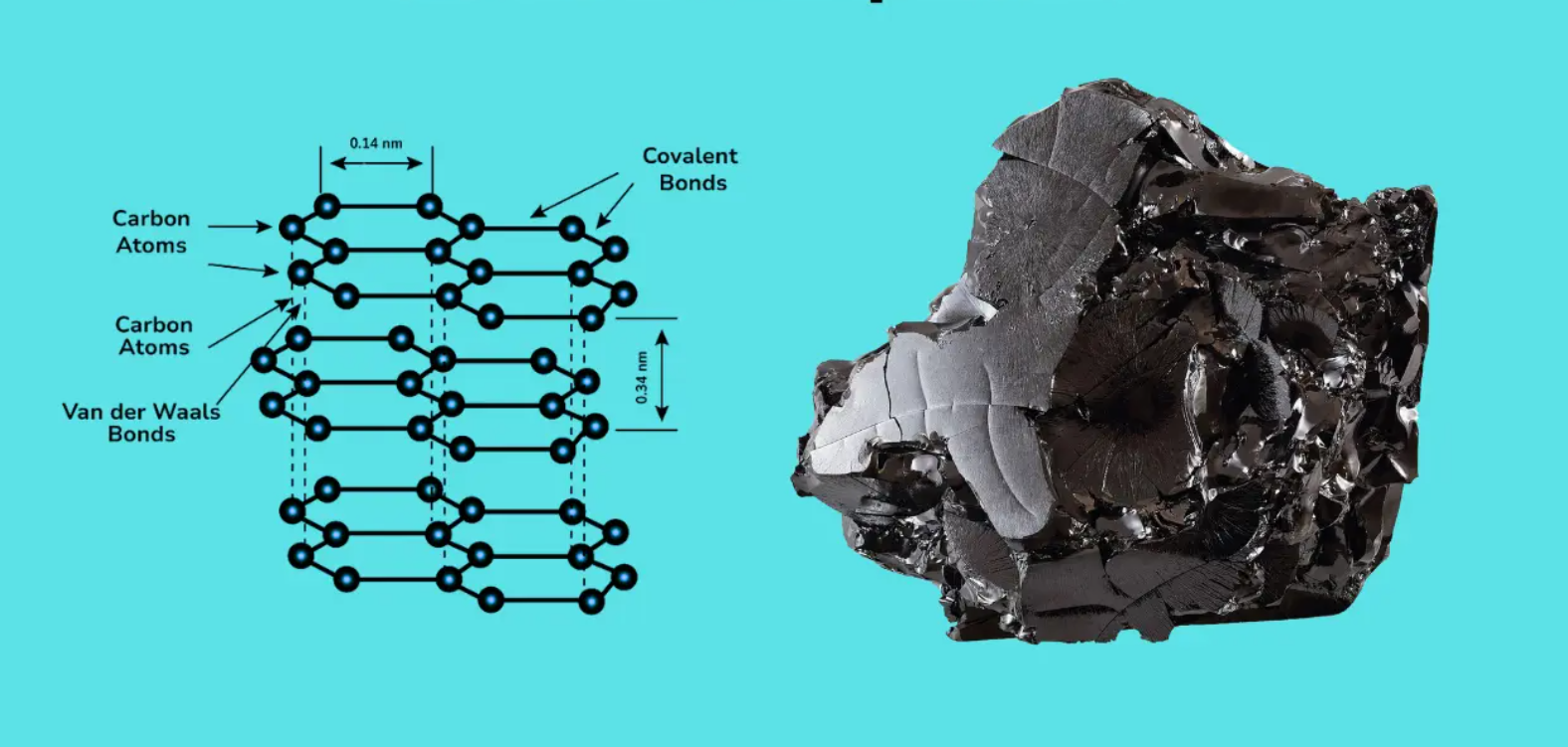
There are many thin layers of graphite. The atoms form a hexagon. They slide easily. Weak forces, van der Waals forces, hold the layers. The layers are 3.35 Å apart.
That allows the electrons to between layers. Each layer displays a strong bond of 1.42 Å between carbon atoms. Properties of graphite make it soft and good for many uses. It helps it construct electricity better. The layered structures are used for the electrodes of Jinsun Carbon for highest performance.
· High Conductivity
Graphite is a good conductor of electricity. In it they move their π electrons freely. They form an electron cloud that works better. The conduction up to 10³ S/m. It can be found in batteries and in electrical tools.
In fact, graphite conduction is better than most non-metals. The electrons don’t stick on any atom so that’s how it works. You can even see this everyday tool such as pencils and batteries.
· Anisotropic Conduction
In graphite, electricity flows differently in different directions. It’s very fast along the layers. Here we have electricity speed of 10⁵ S/m. It’s slower between the layers where the bonds are weaker.
And that’s what makes graphite a good thing when you need electricity to be one way, because it can only flow in one direction. This is possible thanks to the layers. The best quality anisotropic conduction for your needs is guaranteed by Jinsun Carbon.
· Delocalized Π-Electrons
The π electrons move over the layers in graphite. They don’t stick with just one atom. In fact, the current moves well through graphite. The atoms in graphite are in this shape called sp². That means there is one electron free. Electricity can easily pass through the layers of the Nitrocellulose.
Thermal Properties of Graphite!
· High Thermal Conductivity
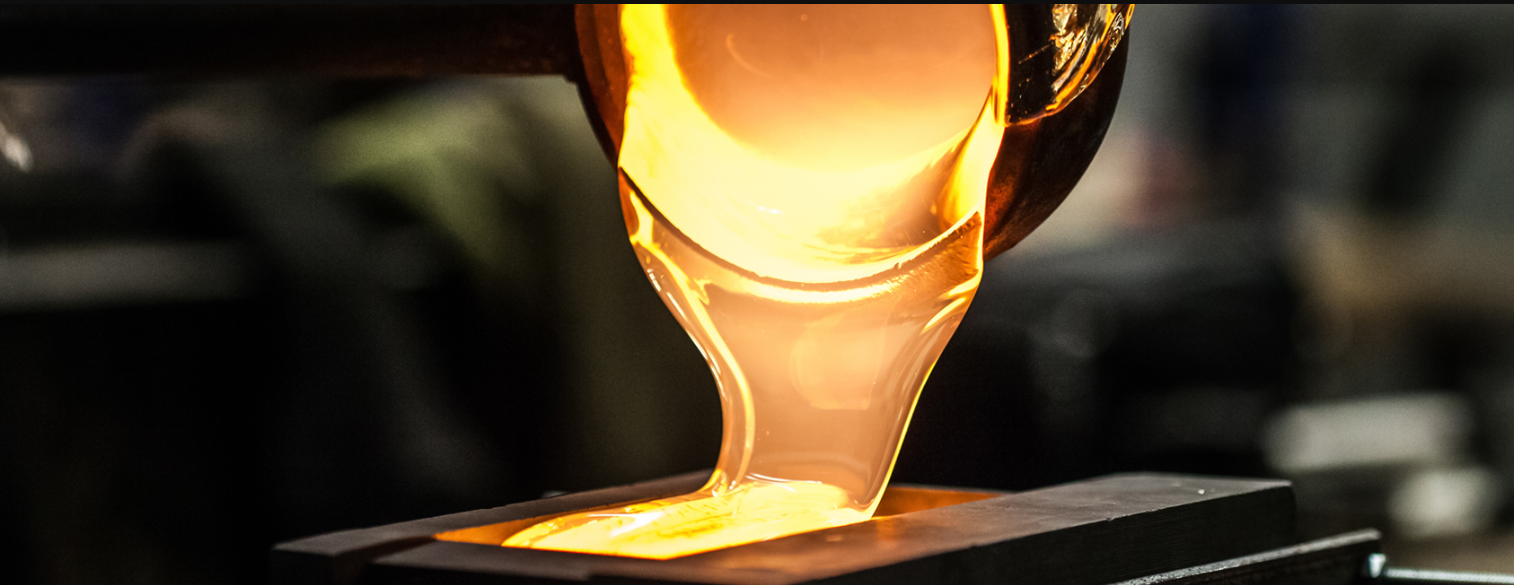
The reason graphite is special is that it moves heat very fast. It is able to send heat at 200 to 800 W/m·K. Heat travels far in graphite because of the layers. It is used in electronics where things can get really hot, engineers use. But you see, some types of graphite can actually reach 1,700 W/m·K.
That’s really fast! These properties are used by parts such as heat sinks to cool. Properties of graphite make it great for moving heat out of computers and lights.
· Heat Dissipation
Getting rid of heat is what graphite is made for. In hot environments it cools down very quickly; it does not hold heat. It comes in good for machines like computers.
The graphite can accept 700 W/m·K of heat. It offers to spread the heat far from the hot places quickly. You see, properties of graphite like these are important in keeping machines from overheating. Devices such as CPUs and LEDs which are hardworking can be proved this.
· Temperature Resistance
When you put graphite under the super-hot super compressor, it stays strong. It melts at 3,600°C and it stands up to it. It’s used in an environment like an oven, or even in a spaceship where things get too hot. It’s great for really hard jobs, things like in a furnace or a space rocket. It doesn’t break when it gets cold either, so it’s good in lots of places.
· Thermal Expansion
Graphite doesn’t change much shape at all when it gets hot. It barely grows, only about 1-2 × 10⁻⁶/°C, and will not bend or crack at high temperatures. So, it’s great for things like computers, etc., that have to fit very precisely together even if they get hot on top.
· Specific Heat Capacity
It doesn’t take much heat to hold graphite. Specific heat capacity is 720 J/kg.K. It has to be pumped with a lot of energy in order to get hot. Graphite can be found in things that store heat, like batteries.
That is why graphite is used in energy and metal machines. It stores heat without getting so hot so quickly.
| Property | Graphite | Copper | Aluminum | Steel | Glass | Ceramics |
| Thermal Conductivity | 150-500 W/m·K | 385 W/m·K | 235 W/m·K | 50 W/m·K | 1.1 W/m·K | 20-30 W/m·K |
| Heat Dissipation | Excellent | Very Good | Good | Moderate | Poor | Fair |
| Temperature Resistance | 3,000°C | 1,085°C | 660°C | 1,370°C | 1,200°C | 1,400°C |
| Thermal Expansion | 4-7 ×10⁻⁶ /°C | 16.5 ×10⁻⁶ /°C | 23 ×10⁻⁶ /°C | 11.7 ×10⁻⁶ /°C | 9 ×10⁻⁶ /°C | 5-10 ×10⁻⁶ /°C |
| Specific Heat Capacity | 0.71 J/g·K | 0.39 J/g·K | 0.90 J/g·K | 0.49 J/g·K | 0.84 J/g·K | 0.76 J/g·K |
| Density | 2.26 g/cm³ | 8.96 g/cm³ | 2.70 g/cm³ | 7.85 g/cm³ | 2.50 g/cm³ | 2.6-3.0 g/cm³ |
Table on Thermal Properties of Graphite!
Structural and Atomic Properties of Graphite!
· Hexagonal Lattice
Carbon in graphite is really tiny. They sit in a hexagon shape. These are flat like paper hexagons. It is 3.35 Å apart. Strong bonds are called sigma bonds that hold the atoms together. Under a special microscope, you can see this hexagon pattern. Graphite is an electrical conductor via its layers.
This shape makes it slippery. Things are made out of graphite, like pencils and machines. It is strong and flexible, but never strong and stiff. This hexagonal design is important for the properties of graphite.
· an Der Waals Forces
Graphite is smooth enough to touch. But these layers can slide because of weak forces. Van der Waals forces are called these forces. It’s soft glue, and acts like the glue between the layers.
The layers are 3.35 Å apart. That means these weak bonds enable graphite to act as a lubricant. When you rub it, the layers move. This is why the properties of graphite make it perfect for pencils. Its softness is due to the importance of van der Waals forces.
· Layered Structure
Graphite is the stack of papers. The papers are, actually, layers of carbon atoms. They arrange in flat sheets. These layers stay apart because there are weak forces between the layers.
However, they slide past each other. That’s why graphite doesn’t break easily. It’s capable of handling heat up to 3,000°C. It’s also useful for factories, thanks to these strong layers. The layers don’t melt and even bend. The layers are important for the structure and industries where graphite is used.
· Planar Carbon Sheets
A graphite is composed of thin flat layers. They are called carbon sheets. They are only 3.35 Å apart; you can’t see them, but they are. This is how graphite gets strong.
Once they carbonize them, they make it a good conductor of heat and electricity. These layers of carbon give graphite manufacturing flexibility, and factories use it. Theses layers are also applicable for things like batteries. Graphite is special because the flat sheets of carbon.
· Sp² Hybridization
Like graphene, graphite consists of carbon atoms that bond in three directions. Sp² hybrid orbitals are called these bonds. It is like arms holding hands. There is one free electron per atom.
As an electron moves around it can help conduct electricity. The layers are strong, but easy to slide because of these bonds. It is why graphite is used for pencils and machines. The strength and how the layers move are both determined by this bonding system.
Applications Based on Graphite’s Properties!
· Crucibles
Graphite is strong. It can last in very hot places. Graphite is used as a crucible material. It can hold up to 3,000°C heat. In these crucibles you can melt gold and silver. The properties of graphite help make crucibles tough. They don’t break the first time you cool them.
However, the graphite is pressed into shape at 1,000°C. The density of these crucibles is 1.7 g/cm³. But they don’t expand much, at only 4.9 x 10⁻⁶/°C. Therefore, they last longer when used many times.
· Refractory Materials
Steel is made from refractory materials. These materials have graphite back in them. For example, they work in really hot places up to 2,500°C. They’re in steel making furnaces.
The properties of graphite keep the materials safe from melting metal. That because metal gets very hot. There is 20% graphite inside. That is order of magnitude, third of 300 w/m·K. Cracks also stop on the graphite. This prevents everything from flying open and weakening things for the long time.
· Electrodes
Strong electrodes are made with the help of graphite. Such as 100,000 amperes, these electrodes can hold very big electricity. They work at 3,000°C or more.
Graphite has what are called special layers, which let electricity move fast. Its density is 1.55-1.60 g/cm³ in each electrode. It keeps everything safe from heat and also the layers, too. In big machines you use graphite to make steel. Things can even get super-hot and it still keeps working.
· Batteries
Energy is stored in batteries. Graphite safely stores energy. It has small parts called anodes, where the battery keeps power. They have a power capacity of 372 mAh/g.
Only 1% (of graphite) grows up when charging. The problem with graphite is that it melts only at 3,550°C, but is really strong. Only these tiny little pieces of graphite, 10-25 microns in size. They prevent the energy from flowing smoothly in the battery.
· Mechanical Seals
Mechanical seals stop leaks. Graphite seals are strong and don’t wear out so you use them. Even as high as 2,500°C, they can do their work. It is hard, 2.2 g/cm³, a seal, against chemicals. The seal is slippery made out of graphite so it does not require oil. This keeps the machine running really long time without the machine falling.
Conclusion
Graphite is useful. Even in heat, it stays strong. The properties of graphite help it work in machines. It’s in batteries and other things. Find out about the information of graphite! In fact, get more at JINSUNCARBON right now.
 BN
BN  EN
EN  RU
RU  TR
TR  FR
FR  DE
DE  KO
KO  UK
UK  JA
JA  PT
PT  CEB
CEB  AZ
AZ  VI
VI  ES
ES  ES_ES
ES_ES  ID
ID  IT
IT  ES_AR
ES_AR  HI
HI  AR
AR  KK
KK  EL
EL  ZH
ZH  FA
FA  NL
NL