Advantages of Vibrated Graphite Block
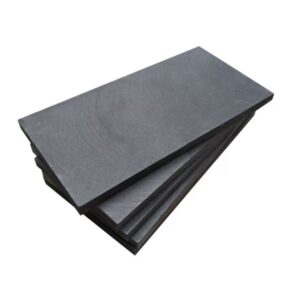
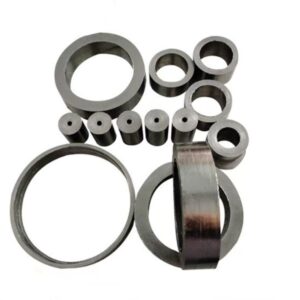
Typically, it is in the form of blocks, cylinders or irregular shapes, and its advantages are very prominent.
Excelente estabilidad térmica
It can maintain stable performance within an extremely wide temperature range of -200℃ to 2800℃ in non-oxidizing atmosphere.
High volume density
Because of this, it has a uniform and dense structure, which makes it has strong impact resistance.
Estable propiedades químicas
It is not prone to reactions in corrosive media such as acids and alkalis.
Excellent electrical and thermal conductivity
It can quickly conduct current and heat, which is crucial in applications such as high-temperature heating and conductive electrodes.
Genial wear resistance
It can adapt to long-term friction conditions.
Guen rendimiento mecánico
According to your specific requirements, you can further process it to meet your size and operating conditions.
In addition, you can also choose ordinary-purity vibrated molded graphite block, high-purity vibrated molded graphite block, special-shaped vibrated molded graphite block, or other types of vibrated molded graphite block.
Uses of Vibrated Graphite Block
Sector metalúrgico
Electrode for electric arc furnaces
It has high conductivity and high-temperature resistance, which makes it achieve efficient conversion of electrical energy to thermal energy. Because of that, you can use it as a core component in steel and non-ferrous metal smelting.
Furnace lining materials
You can use it to build the inner forro of metallurgical furnaces. Because of its resistance to thermal shock and corrosion, it can extend the service life of the furnaces.
Photovoltaic and semiconductor field
Thermal field components of single-crystal silicon growth furnaces
You can use it in graphite crucibles, heaters, and insulation tubes. Its high-purity materials can avoid contaminating the silicio material and ensure the quality of single-crystal silicon.
Semiconductor wafer carrier platforms
You can utilize its uniform thermal conductivity to ensure consistent heating of wafers during processing.
Campo químico
Reaction vessel linings and heat exchanger components
It can transfer heat in strong acid and strong alkali reaction environments, while protecting the equipment body.
Anode plates of electrolytic cells
It can withstand high temperatures and strong corrosive environments during electrolysis, and then improve electrolysis efficiency and product purity.
Mechanical and mold field
High-temperature mold materials
Because it can withstand repeated cold and hot impacts, you can use it in non-ferrous metal die-casting molds, glass forming molds, etc. to ensure mold accuracy.
Componentes resistentes al desgaste
You can use it to make various mechanical sealing rings, bearings, etc. Due to its self-lubricating properties, it can reduce wear and lower equipment maintenance costs.




 ES_ES
ES_ES  EN
EN  RU
RU  TR
TR  FR
FR  DE
DE  KO
KO  UK
UK  JA
JA  PT
PT  CEB
CEB  AZ
AZ  BN
BN  VI
VI  ES
ES  ID
ID  IT
IT  ES_AR
ES_AR  HI
HI  AR
AR  KK
KK  EL
EL  ZH
ZH  FA
FA  NL
NL