Advantages of graphite heat shield
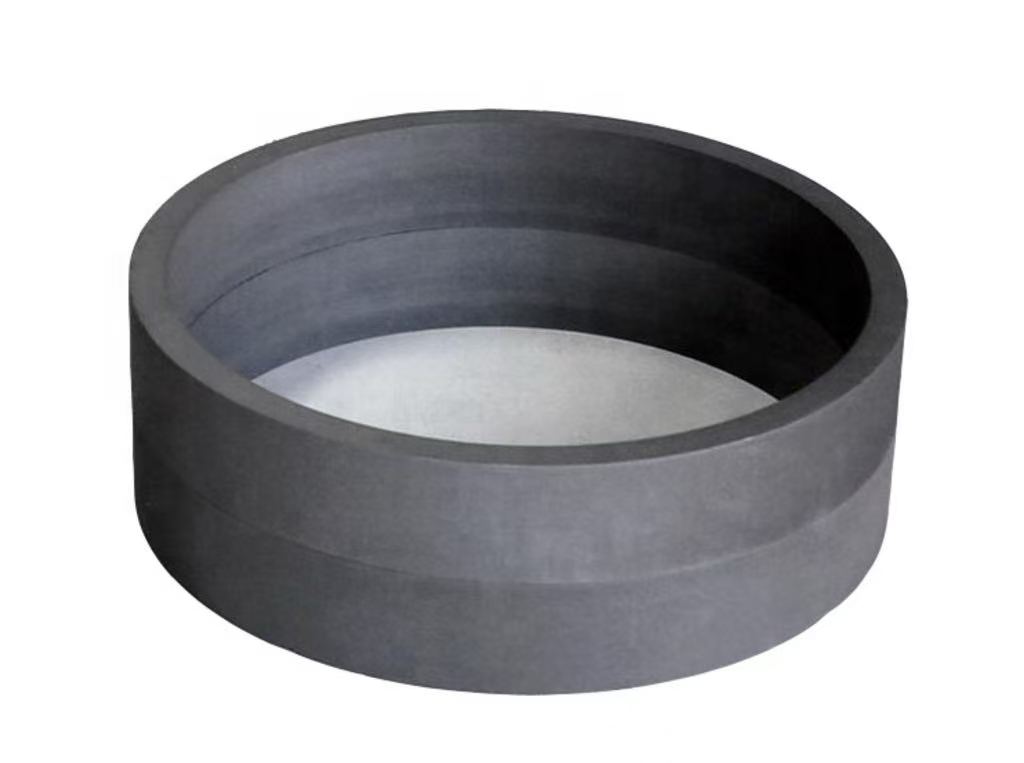
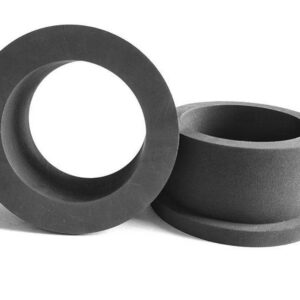
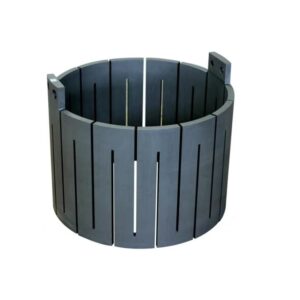
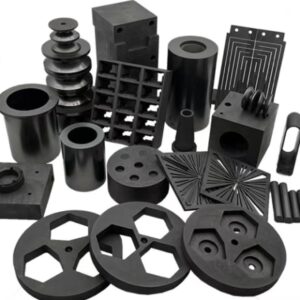
Graphite heat shield commonly comes in plate, tube, and arc-shaped assembly styles, which has outstanding comprehensive advantages.
Extremely strong high-temperature thermal stability
It can withstand a wide temperature range of -200℃ to 3000℃ without deformation in vacuum and atmosphere environments.
Strong heat radiation reflection capability
It can effectively blocks heat loss and achieving excellent insulation and heat preservation effects.
Inert chemical property
It is resistant to erosion by metal melts.
Low thermal expansion coefficient
It resists thermal shock, which is less likely to crack under sudden temperature changes.
Easy to process and shape
It can be milled, drilled, cut, and assembled and has the long service life.
Low heat conductivity
It can prevent heat from spreading outward, stabilizing the internal temperature zone of the furnace.
Uses of graphite heat shield
Photovoltaic semiconductor industry
High-temperature furnace chamber insulation
You can use it in precision high-temperature processes such as photovoltaic silicon wafer sintering, semiconductor wafer annealing, and epitaxial growth. It can efficiently block internal heat radiation and heat conduction, which stabilizes the constant temperature environment of the furnace chamber. With low heat conductivity, it prevents heat loss and damage to the vacuum chamber and sealing components, eliminate the release of impurities. And it effectively ensures the processing cleanliness of precision components, improving the yield of finished products.
Metallurgical Powder Metallurgy Industry
Workpiece sintering heat treatment
You can widely use it in metallurgical processes such as sintering of hard alloys, metal powder forming, vacuum quenching and annealing of steel. It can evenly distribute the furnace temperature, completely solving local overheating, uneven heating, deformation and oxidation of the workpiece. And it significantly reduces the heat loss of the furnace body, which achieves remarkable energy-saving and consumption reduction effects.
Industrial electric furnace industry
Vacuum furnace, atmosphere furnace, and high-temperature muffle furnace with thermal insulation
You can use it as the core thermal insulation structure of high-temperature electric furnaces to prevent the transfer of high temperatures. It can significantly reduce the surface temperature of the equipment shell, avoiding the risk of high-temperature burns. And it reduces the energy consumption for heating and temperature control fluctuations of the equipment. So it effectively protects the heating components, which significantly extends the overall service life of the high-temperature ηλεκτρικός φούρνος.
New Materials Chemical Industry
Ceramic and carbon fiber high-temperature carbonization and sintering insulation
Due to its stable chemical properties, you can use it in the carbonization and sintering processes of new ceramic, carbon fiber, and composite materials. It does not react with any corrosive media, which can stably isolate harsh high-temperature conditions. It provides comprehensive protection for the furnace structure, ensuring the continuous and stable operation.
Field of scientific research experiments
Heat insulation of the high-temperature test equipment
You can use it for laboratory high-temperature tube furnaces, thermogravimetric analyzers and other precision experimental equipment. It avoids damage to the precision detection instruments caused by high-temperature radiation and deviations in experimental data. And it can precisely isolate the experimental heat source, which ensures the accuracy and reliability of various high-temperature experimental data.

 EL
EL  EN
EN  RU
RU  TR
TR  FR
FR  DE
DE  KO
KO  UK
UK  JA
JA  PT
PT  CEB
CEB  AZ
AZ  BN
BN  VI
VI  ES
ES  ES_ES
ES_ES  ID
ID  IT
IT  ES_AR
ES_AR  HI
HI  AR
AR  KK
KK  ZH
ZH  FA
FA  NL
NL