
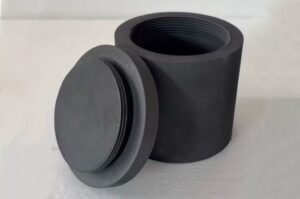
In high-temperature melting, the material of the crucible directly determines the melting efficiency, product purity and equipment lifespan. Graphite crucibles have structural stability, chemical inertness and thermal performance, which are more suitable for processing non-oxidizing and low-reactive melts. You can use them to melt precious metals, non-ferrous metals, semiconductor materials, inorganic non-metallic melts, etc. The are not prone to corrosion, cracking, contamination of the melt or occurrence of safety accidents.
Precious Metals That Can Be Melted in Graphite Crucibles
Gold
Its melting point is approximately 1064℃, much lower than the normal operating temperature of graphite crucibles. And it is completely inert with graphite, so using 黒鉛るつぼ can reduce the loss due to high-temperature oxidation. It ensures the purity and fluidity of the molten gold, making them the preferred choice for the jewelry industry and precious metal refineries.
シルバー
Its melting point is approximately 961℃, which is prone to oxidation at high temperatures. Graphite crucibles can inhibit the oxidation reaction under weak reduction or inert atmospheres, which reduces the loss of silver. Its chemical inertness prevents the silver liquid from being contaminated by carbon, ensuring the stability of the composition. And it is suitable for scenarios such as pure silver melting, silver-copper alloy preparation, which balances efficiency and cost.
Platinum, Palladium, Rhodium and Other Platinum Group Metals
They have high melting points and extremely strong chemical stability, so graphite crucibles can withstand their melting temperatures. And it does not react with the molten substances, which are used for the purification, alloying and precision casting of platinum group metals. You can use it in the production of thermocouples, catalytic materials, and aerospace precision components to meet the purity requirements.
Non-ferrous Metals That Can Be Melted in Graphite Crucibles
Copper and Copper Alloys
The melting point of pure copper is approximately 1083℃ and that of alloys such as brass and ブロンズ are even lower. Graphite crucibles does not react with the copper liquid, which can stably withstand the melting process. It prevents the increase of carbon content in the melt or contamination by impurities, ensuring the electrical and thermal conductivity. You can widely use it in the production of copper rods, copper plates, copper valves, decorative parts, etc.
Aluminum and Aluminum Alloys
The melting point of aluminum is approximately 660℃ and the melting temperature of aluminum alloys is around 700–800℃. Graphite crucible has a low thermal expansion coefficient and can withstand rapid cooling and heating, which is not prone to cracking. In an inert atmosphere, it has good compatibility with the aluminum liquid, suitable for the melting of aerospace aluminum alloys. And combined with coating treatment, it can further reduce graphite erosion, extending the service life of the crucible.
Zinc, Tin, Lead and Their Alloys
They are all low-melting-point metals with simple melting processes, so graphite crucibles can be easily adapted. The inner wall of the graphite crucible is smooth and does not stick to the molten material, so it can inhibit metal oxidation. And it ensures uniform alloy composition, which is recommended to use high-density graphite crucibles to extend the service life.
Other Materials That Can Be Processed in Graphite Crucibles
Semiconductor Materials
The semiconductor industry has extremely high requirements for material purity. Graphite crucibles have ultra-low ash content and high purity, which meet extremely high requirements of the semiconductor industry. You can use high-purity graphite crucibles in the single crystal silicon pulling process to hold the molten silicon liquid. Because of the high carbon content and impurities, it support the growth of silicon ingots, enhancing the photoelectric conversion efficiency of silicon wafers. And you can also use them for melting and crystal growth of compound semiconductors such as gallium arsenide, indium phosphide, and silicon carbide. With the high-temperature stability and chemical inertness, it ensures that the performance of chips and optoelectronic devices meets the standards.
Glass, Ceramics, Glazes and High-Temperature Melting of Chemical Substances, Salts, and Minerals
You can use graphite crucibles for processing non-basic and non-oxidizing inorganic melts. Because they can avoid metal ion contamination from ceramic crucibles, you can use them to melt special optical glass and high-purity glass. They are suitable for reducing atmosphere sintering processes and doesn’t participate in the reaction, ensuring the purity of the products. You can also use them in scenarios such as mineral decomposition and high-temperature activation of catalysts. They are applied in high-temperature melting, dehydration and synthesis of inorganic salts and mineral raw materials.
Substances That Are Not Suitable for Melting in Graphite Crucibles
Strongly Oxidizing Metals and Slag
You can not use them to melt the black metals such as iron, steel, and nickel-based high-temperature alloys and slag containing high-valent iron, manganese, and chromium. They have strong oxidizing properties at high temperatures and will undergo oxidation reactions with carbon, generating carbon monoxide gas. They will erode and perforate the crucible wall, form alloys with carbon, resulting in increased carbon content in the molten material and its subsequent waste. So when melting these materials, you should processed them in ceramic crucibles made of alumina or magnesium oxide.
Materials that can react with carbon at high temperatures
They are not suitable to melt the alkali metals such as titanium, zirconium, niobium and tantalum. They will form carbides with carbon at high temperatures, which will damage the graphite structure and contaminate the metal melt. And refractory metals like tungsten and molybdenum will also react with carbon in non-inert atmospheres which is neither applicable. Moreover, if using them to melt compounds containing phosphorus and sulfur, it will react with carbon to form toxic gases.
Strongly Alkaline Fluxes
You can also not use them to melt strong alkaline substances such as molten sodium hydroxide, potassium hydroxide, sodium carbonate. When being exposed to high temperatures, they will react vigorously with the carbon and impurities in the graphite. And they result in the formation of honeycomb-like holes on the inner wall of the crucible, completely losing their usability. So you should select nickel crucibles, iron crucibles or corundum crucibles, prohibiting the use of graphite crucibles
結論
Graphite crucible has high-temperature-resistant, chemically inert, and highly efficient melting container, which application scope is clear and highly targeted. It can safely melt various materials, but it is also important to avoid prohibited materials strictly. With the core advantages in not polluting the melt, low loss, and resistance to thermal shock, it covers various scenarios ranging from civilian casting to high-end electronic manufacturing. And it can meet the preparation requirements for high-precision and high-purity materials, which ensures production safety and product quality.
 JA
JA  EN
EN  RU
RU  TR
TR  FR
FR  DE
DE  KO
KO  UK
UK  PT
PT  CEB
CEB  AZ
AZ  BN
BN  VI
VI  ES
ES  ES_ES
ES_ES  ID
ID  IT
IT  ES_AR
ES_AR  HI
HI  AR
AR  KK
KK  EL
EL  ZH
ZH  FA
FA  NL
NL