
Graphite furnaces are an essential equipment in different industries and laboratories because of its high temperature resistance and accurate capability to control the temperature. Such furnaces are used extensively, for example for material testing, metal production, and in particular for atomic absorption spectroscopy (AAS). Graphite Furnaces: Highly sensitive techniques for the detection and measurement of trace elements often rely on methods like atomic absorption spectroscopy, where graphite furnaces are integral to the enhancement of the analysis accuracy and sensitivity. In this blog, we will dive into graphite furnaces and its types, tips, and guidelines to help you with your furnace in the world of graphite furnace atomic absorption spectroscopy (GFAAS) and electric arc furnaces.
What is a Graphite Furnace?
Graphite furnace is a laboratory instrument used for heating materials to very high temperature levels. The primary component of a graphite furnace is its graphite material, which can withstand high temperatures as well as being a good electrical conductor. These graphite furnaces are commonly employed in applications that necessitate fine control over temperature, in applications like atomic absorption spectroscopy (AAS), materials science, and metallurgy.
Its furnace is made of high-purity graphite, indestructible materials able to reach over 3000 degrees over heat and resist, unlike others, to heat degradation and oxidation. These high temperatures are generally achieved with electric heating elements, which can heat the furnace quickly and provide excellent temperature uniformity.
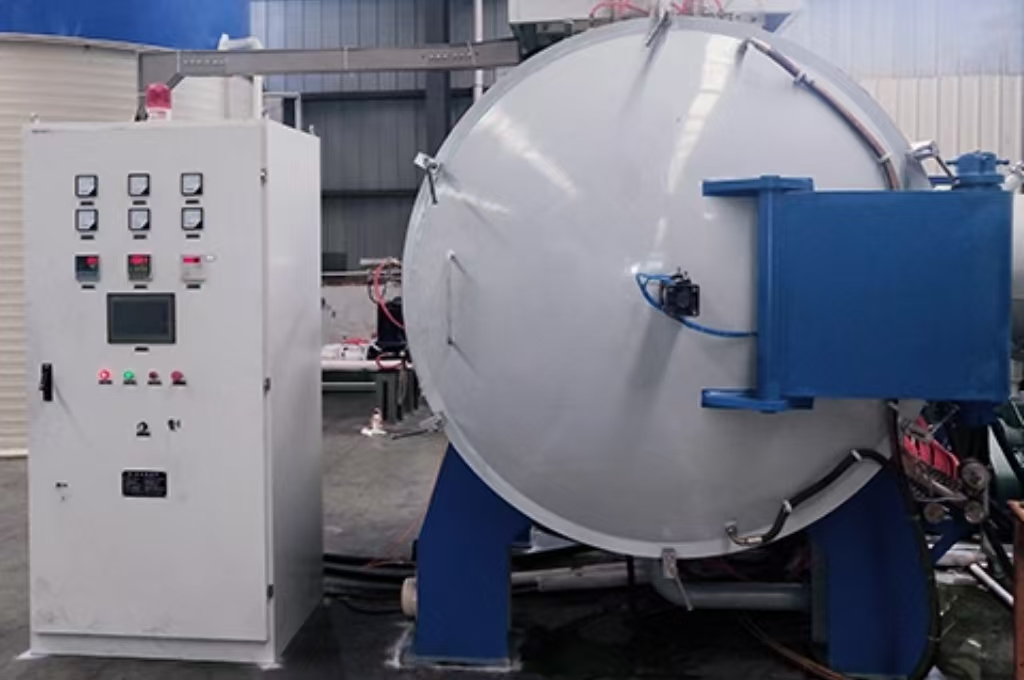
How Does a Graphite Furnace Work?
Driving the reaction above can be done in three major ways: the first one is electric resistance heating —this is simply by using electrical resistance to create very high temperatures in a controlled environment. A small piece of the sample material is loaded and placed into a cavity/chamber that is made using high-purity graphite. When the furnace is on, an electrical current runs through graphite material, producing heat. This heat is directly transferred to the sample, heating it to the desired temperature.
Depending on the application, the graphite furnaces can reach from 1,000°C to more than 3,000°C. At these settings, many of the sample processes could happen, including vaporization, decomposition, or chemical reaction. Some of these applications include atomic absorption spectrophotometry, where trace metals must be correctly measured using high precision and high temperature graphite furnaces.
Types of Graphite Furnaces
Graphite Vacuum Furnace
A vacuum graphite furnace works in a vacuum so that the sample does not react with the air or oxygen in the heating process. This is especially relevant for high-temperature processes such as sintering, degassing, or other high-temperature treatments in which air must be excluded from the sample due to contamination. This vacuum ensures that there is a minimal reaction with oxygen or other gas in the atmosphere, which is particularly useful for the applications in materials science and metallurgy.
High-Temperature Graphite Furnace
Typical temperatures achieved in such furnaces are around 2,500°C or even higher. These furnaces serve the processing of materials, which can imply testing work for example in superalloys or kite-related processing or chemical reactions at extreme temperatures. Excellent for R&D workloads where the nature of thermal testing would outstrip the temperature capabilities of a conventional furnace.
Graphite Crucible Furnace
A crucible furnace that uses a graphite crucible, which is the container for the heated material. The crucible protects the sample from high temperatures, as well as contamination and allows for quick heating. It is used in metal casting, alloying, and certain chemical processes with high temperatures for melting or other reactions. The crucible ensures that the sample is isolated from other unwanted elements.
Graphite Tube Furnace
A hollow tube is made from graphite, used for heating the sample (graphite tube furnace). The sample is located in the tube, and the furnace heats the tube to very high temperatures. In atomic absorption spectroscopy (AAS), for example, small quantities of sample are introduced into the tube and then specific heating is applied to vapourise the sample for analysis. They are also analytical and have a tube furnace that is used for sample heating.
Graphite Furnace AAS vs Flame AAS
Graphite Furnace AAS (GFAAS) is a sensitive method that utilizes a graphite furnace to heat the sample. This approach is suitable for the analysis of trace metals in multiple matrices. Due to its capability to handle very low sample volumes, GFAA is frequently employed in areas such as environmental testing, food safety, and pharmaceuticals, where low detection limits are crucial. After the sample is heated in a graphite furnace, causing the metal to atomize, the amount of light absorbed at particular wavelengths is measured.
In contrast, Flame AAS (FAAS), atomizes the sample using a flame. Although it is a quicker and simpler technique, it has usually a lower sensitivity than GFAA and needs higher sample volumes. Flame AAS is widely used for high-throughput applications that do not require high accuracy (e.g., routine quality control testing, analysis of more concentrated samples).
GFAA has an advantage over FAAS for the detection of metals at very low concentrations, usually in the parts-per-billion (ppb) range, it is the method of choice for trace metal analysis.
What is Graphite Furnace Atomic Absorption (GFAA)?
GFAA (Graphite Furnace Atomic Absorption ) is a sensitive method to analyze the concentration of metals in liquid samples. In this approach, a few samples are input into a graphite furnace that is at a very high temperature. Varying degrees of heat cause the atoms in the sample to absorb particular wavelengths of light, after which it is measured by a spectrometer. The intensity of light absorbed is directly proportional to the concentration of the metal in the sample.
Sensitivity is one of the priority benefits of GFAA for trace metals analysis. Since the graphite furnace burns the sample under tight conditions, it reduces interference from other elements and produces very sensitive measurements. GFAA is particularly suited for detecting elements defined as heavy metals at low concentration levels involving the environmental testing of water, soil, and air.
Graphite Furnace Atomic Absorption Spectroscopy (GFAAS)
Graphite Furnace Atomic Absorption Spectroscopy (GFAAS) is a variant of atomic absorption spectroscopy that makes use of a graphite furnace to serve as the atomizer. Such things are a small piece of the material that can be introduced into the furnace, and heated to a very high temperature, causing the atoms in the sample to vaporize. These vaporised atoms subsequently absorb light of characteristic wavelengths, and the quantity of light that is absorbed is directly proportional to the concentration of metal in the sample.
GFAAS is routinely used to analyse trace metals in many sample types, including environmental (water, soil), biological (blood, urine) and industrial material. It is very sensitive and thus can detect metals which cannot be detected using flame AAS or other methods.
GFAAS offers a number of advantages, including improved accuracy and sensitivity for detecting metals at trace levels. This makes a critical tool in research, quality control, regulatory testing and many other important applications.
Conclusion
Graphite furnaces are essential and widely used in many processes, from laboratory use to industrial applications. Their unique properties, including the capability to achieve very high temperature and achieve precise thermal control, make them a game changer in processes such as atomic absorption spectroscopy (AAS), especially in trace metals detection. Graphite furnaces are essential for things like environmental sample analysis, high-performance material production, and metal production with electric arc furnaces, where special processes require the high reliability and efficiency of graphite furnaces.
FAQs
What is Graphite Furnace Atomic Absorption Spectroscopy Application?
GFAAS find great applications in environmental testing, clinical analysis and material science. It is especially valuable for identifying trace elements in water, soil, food and biological specimens.
What Are the Components of Graphite Furnace Atomizer?
This device generally consists of graphite tube (the atomizer and heating chamber), heating elements (usually electrical) and atomizing gas (to vaporize the sample).
What Are the Advantages of Graphite Furnace Atomic Absorption Spectroscopy?
The major benefits are that it is highly sensitive, can measure small number of molecules in small sample sizes and has low limits-of-detection for the metals.
What is the Disadvantage of Graphite Furnace?
The main advantages involve greater surface areas, no residual contaminant, and high-temperature tolerance, whereas the main disadvantages comprise the higher expense of a graphite furnace in comparison to other furnace types and requirements of routine equipment maintenance and risks of tube clogging due to an accumulation of residue.
 CEB
CEB  EN
EN  RU
RU  TR
TR  FR
FR  DE
DE  KO
KO  UK
UK  JA
JA  PT
PT  AZ
AZ  BN
BN  VI
VI  ES
ES  ES_ES
ES_ES  ID
ID  IT
IT  ES_AR
ES_AR  HI
HI  AR
AR  KK
KK  EL
EL  ZH
ZH  FA
FA  NL
NL